If you’ve been experiencing chronic tension, stress, stiffness, or a feeling of being stuck in your body, somatic yoga may be the answer. Unlike traditional yoga styles that focus on stretching, strength, and alignment, somatic yoga works from the inside out. It’s a slow, deep, and mindful practice that teaches your brain to let go of long-held stress patterns that regular stretching never seems to heal.
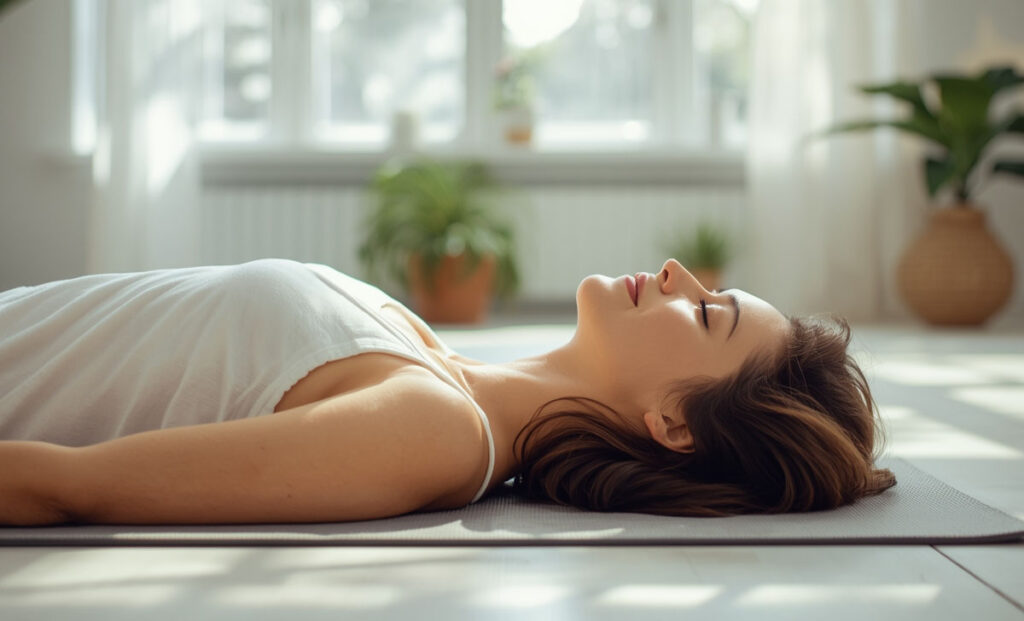
In today’s fast-paced world, most people have tight shoulders, tight waists, and jaws that feel like they’re permanently stuck. Somatic yoga helps you release all of this by teaching your body to soften through awareness, not by forcing it to be flexible.
This isn’t just another yoga trend. It’s a neuro-body practice that has been studied in somatic science for decades. It’s changing the way people think about healing, moving, and reducing stress. Let’s take a look at what exactly somatic yoga is, how it works, and why it’s becoming a favorite among people seeking natural, sustainable healing.
What is somatic yoga?
Somatic Yoga is a mindful, therapeutic way to move that combines
- classic somatic education (Thomas Hanna’s work)
- slow, deliberate movements
- breath awareness
- conventional yoga principles
- nervous-system re-patterning
The word “somatic” comes from the Greek soma, meaning “the living body from within.”
In basic terms, Somatic Yoga helps you to feel your body more clearly and deliberately so you may release muscle tension that has become automatic or unconscious.
Where traditional yoga focuses on stretching, Somatic Yoga focuses on retraining the brain-to-muscle link. This is why it often gives faster, more long-lasting relief.
How Somatic Yoga Works (The Science Behind It)
Somatic Yoga is predicated on a mechanism called pandiculation – a natural technique your body employs to restore stress. You actually do it every day without noticing: when you wake up and stretch with a slow, conscious yawn, you’re pandiculating.
Here’s how it works:
- First, you contract the muscles gently
- Not in a harsh way, just a little push.
- Then, you slowly let them go.
- During this phase, the brain learns where the tension is stored.
- Finally, the muscles let go completely.
- Because the brain “relearns” how to let go.
This lets go of:
- Persistent tightness
- Stress-based tension
- Old injury patterns
- Poor posture
- Limited movement
Somatic yoga literally rewires the nervous system so that your muscles stop going back to tight, protective patterns.
Harvard Health – Stress & the Nervous System
How is Somatic Yoga different from regular yoga?
If you’ve practiced Vinyasa, Hatha, or Yin yoga, Somatic Yoga will feel like entering a different world. It’s calmer, slower, and significantly more inward.
Here are the key differences:
1. Slow, normal movements → significant change
Somatic yoga doesn’t use a lot of tension; instead, it uses subtle, focused micro-movements.
2. There’s no pushing, forcing, or straining
You stay below your edge, which keeps your nervous system safe.
3. Focusing is not on the pose
It’s not about “doing the perfect pose.”
It’s about organically relaxing into the position.
4. You’re fully aware of what you’re doing.
The mind is always inside the body.
5. The goal is long-term freedom, not momentary flexibility.
Regular stretching often leads to:
- Momentary relief
- Muscles become stiff
- Overuse costs money
Somatic yoga creates changes in the body at the brain level, which results in lasting results.
Who Can Somatic Yoga Help?
Anyone can do somatic yoga, but it is especially helpful for people who:
- Have chronic stiffness or stiffness
- Bear with fear or stress
- Sit for long periods of time
- Have poor posture
- Have neck and shoulder pain
- Deal with sciatica or back pain
- Recover from an injury
- Feeling disconnected from their body
- Want to calm your nervous system
- Like to move slowly and purposefully
Somatic yoga is easy to do, even for seniors, beginners, or people who can’t move much. It’s different from other types of yoga, which are much more difficult.
Key Ideas Behind Somatic Yoga
There are a few basic ideas that guide the entire practice of somatic yoga.
1. Mindfulness over mechanical stretching
Somatic yoga asks you to feel each action rather than do it automatically. This awareness awakens sensory pathways that have become numbed by stress or habit.
2. Slow is intense
Slow allows the nervous system to recognize patterns of tension that slip through the cracks from fast, thoughtless movements.
Slow teaches the brain to let go.
READ MORE: Yoga for Stress Relief & Better Sleep
3. Less work, more freedom
The philosophy is simple:
You don’t need force to make changes – you need awareness.
When muscles stop “being alert,” they naturally lengthen.
4. First, safety
Somatic yoga makes the brain feel safe again.
And once the brain feels safe, it relaxes the body.
5. Changing patterns, not fixing
You don’t fix the posture from the outside; you teach the body to fix itself from the inside.
The Good Things About Somatic Yoga
Somatic Yoga has a lot of benefits for your body, mind, and emotions.
These are the strongest ones:
1. Helps with chronic stress
Somatic yoga is great for releasing:
- Tight shoulders
- Tight waist
- Neck pain
- Lower back tightness
- Tight jaw
- Tight hamstrings
It doesn’t stretch; it breaks.
2. Helps you move and bend more easily on your own
Flexibility increases when muscles release in the right way and without jerking.
Your body moves more easily because it’s no longer fighting itself.
3. Reduces stress and anxiety
Somatic yoga calms the parasympathetic nervous system.
Many people experience within minutes:
- More calm
- More grounded
- More focused
- Not as overwhelmed
It’s one of the best ways to relieve stress through movement.
4. Your posture automatically improves
If you’ve ever tried it, you know that “fixing” your shoulders by pulling them back doesn’t work.
Somatic yoga helps with posture by loosening the muscles that initially pull you out of alignment.
5. Helps you recover from injuries and pain
Somatic yoga can help you recover from the following ailments:
- Sciatica
- Frozen shoulder
- Recurrent strains
- Lower back problems
- Tension headaches
It is not too difficult for rehabilitation.
6. Improves body awareness and mind-body connection
Many people do not feel connected to their own bodies.
Somatic yoga helps you connect with your inner self through pure emotion.
It helps you control your emotions, feel good about your body, and believe in yourself.
7. Deep Nervous System Reset
This method teaches your nervous system to:
Rest and digest instead of fight or flight
So, you sleep better, digest better, and feel more relaxed.
Common Somatic Yoga Poses and Movements
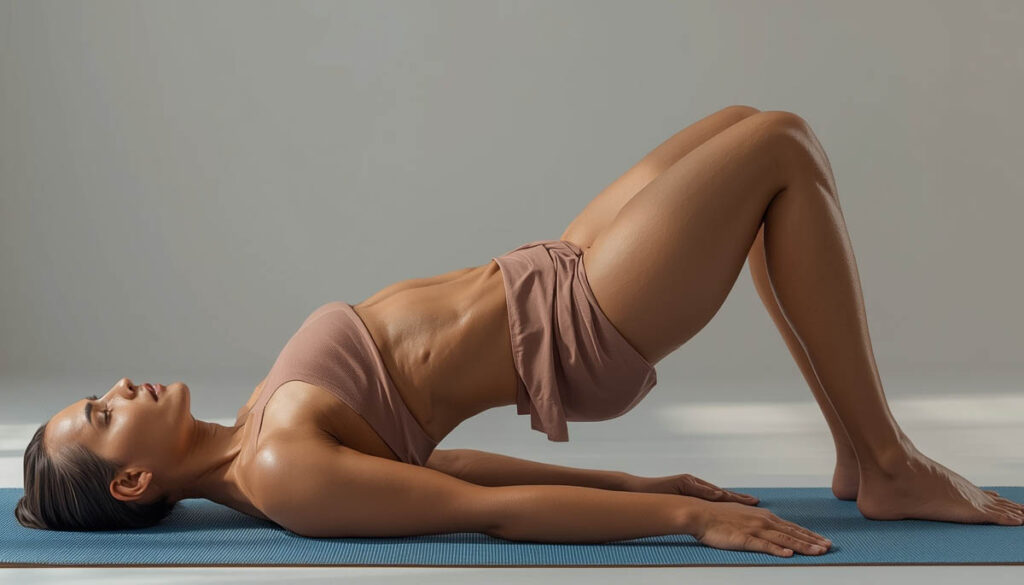
Here are some of the traditional movements you’ll see regularly in a somatic yoga class:
1. Arch and Flat
A gentle movement of the spine that helps relieve tension in the lower back.
2. Cat Stretch (Somatic Version)
This variation doesn’t use the usual cat/cow pose. Instead, it slowly contracts and releases to relax the spine.
3. Shoulder Clock
Imagining your shoulder is rotating around the face of a clock can help relieve tightness in your neck and shoulders.
4. Pendiculation Flow
Conscious contraction → slow release → complete relaxation.
5. Side Bend
Helps relax the muscles in the waist, hips, and lower back.
6. Practice Mindful Walking
A mindful way to change the way you stand and walk.
These movements may seem simple, yet when done with mindfulness and breathing, they have a big impact.
A Simple Somatic Yoga Routine You Can Try (5 Minutes)
1. Relax as you lie down.
Feel your breath rising and falling.
2. Gently arch your back
Inhale and lift your lower back slightly.
3. Slowly flatten your back.
As you exhale, press into the mat.
4. Be mindful of your shoulders
Raise them slightly toward your ears, then slowly lower them.
5. Move your right hip toward your shoulder.
Then, slowly release and do the same on the opposite side.
6. End the period of stillness
Let your entire body relax.
You will feel very light even after a few minutes.
Why Somatic Yoga is Becoming Popular Worldwide
People around the world are doing somatic yoga because:
- It’s not hard.
- It works.
- It’s easy to get.
- It helps you heal over time.
- It helps reduce the stress of modern lifestyles.
- It creates lasting change.
Somatic yoga is a great break from the strenuous workouts and overstimulation that are common today.
It’s not about how well you do.
It’s about being there.
Final Thoughts
Somatic yoga isn’t just a way to move. It’s a way for your mind and body to talk to each other. It teaches you to be aware of how you move, breathe with purpose, and reconnect with parts of yourself that you haven’t thought about in years.
Somatic Yoga is a safe, powerful, and life-changing way to deal with stress, stiffness, chronic pain, or just want to get to know your body better.
Frequently Asked Questions
1. What is Somatic Yoga in simple words?
Somatic yoga is a calm, mindful movement practice that helps your body release underlying tension. You don’t need to force yourself to stretch; just move slowly and mindfully so your nervous system can rest and recharge.
2. Is somatic yoga good for people just starting out?
Yes. Somatic yoga is one of the easiest activities for beginners because it’s gentle, safe, and easy to understand. People with very limited mobility can still do it.
3. How is somatic yoga different from regular yoga?
Regular yoga is all about poses, flexibility, and alignment. Somatic yoga is about mentally moving your body and retraining your nervous system. It helps release long-held tension that stretching alone can’t.
4. Can Somatic Yoga Help with Back Pain?
Yes, absolutely. Somatic yoga is a great way to relieve lower back pain because it relaxes tight muscles and makes you feel more relaxed. Many people feel better after a few sessions.
5. Can somatic yoga help with your posture?
Yes. Somatic yoga helps your body naturally improve posture by loosening tight muscles, without forcing or “fixing” them.
6. What do you do in somatic yoga?
You lie down or sit comfortably and perform gentle, gentle movements while paying attention to your breath. The goal is always to feel the movement, not to get the pose perfectly right.
7. Is somatic yoga safe for older people to do?
Yes, it is one of the safest things for older people. The movements are gentle, easy to do, and can be modified to suit your body, making it great for older people.