
Complete Daily Menus | Balanced Macros | Grocery List Included | Easy Recipes
Finding the right calorie target is one of the most important steps in any weight loss journey. For most adults, a 7-Day Meal Plan for Weight Loss 1500 Calories creates the perfect balance between a meaningful calorie deficit and adequate nutrition. It is low enough to trigger consistent fat loss, yet high enough to keep your energy levels stable, preserve lean muscle mass, and prevent the metabolic slowdown that comes with extreme dieting.
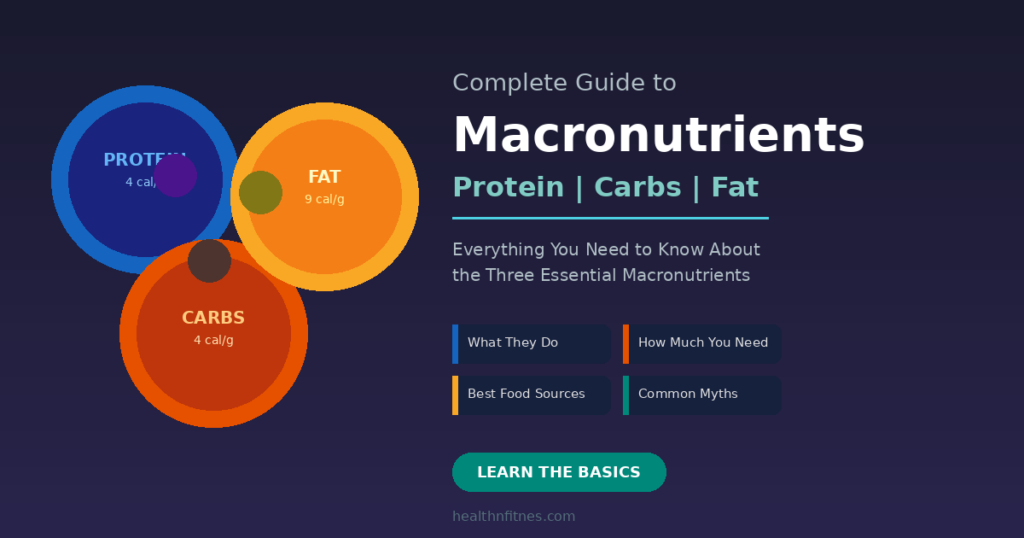
This 7-day meal plan takes the guesswork out of healthy eating. Every breakfast, lunch, dinner, and snack has been carefully designed to deliver approximately 1500 calories per day with an optimal macronutrient ratio of 30 percent protein, 40 percent carbohydrates, and 30 percent healthy fats. Each meal uses simple, affordable ingredients that are available at any grocery store worldwide. Whether you are starting your weight loss journey for the first time or looking for a structured reset after falling off track, this plan provides everything you need. Follow it exactly for seven days, and you can expect to lose 0.5 to 1 kilogram of body fat while feeling satisfied and energized throughout the day.
How a 1500-Calorie Diet Works for Weight Loss
Weight loss fundamentally depends on consuming fewer calories than your body burns. The average adult burns between 1800 and 2400 calories daily through basic metabolism, daily activities, and exercise. A 1500-calorie diet creates a deficit of 300 to 900 calories per day, which translates to approximately 0.3 to 0.9 kilograms of fat loss per week through diet alone.
Unlike crash diets that slash calories to dangerously low levels, a 1500-calorie plan sits in the sweet spot recommended by most registered dietitians and nutritional scientists. The American Journal of Clinical Nutrition has published multiple studies confirming that moderate calorie deficits of 300 to 500 calories per day produce the most sustainable long-term weight loss results with minimal muscle loss and metabolic adaptation.
The key advantage of this calorie level is sustainability. You still eat three full meals and two snacks daily, enjoy a wide variety of foods, and never feel deprived or starving. This psychological comfort dramatically increases adherence, which is ultimately the single most important factor in any diet’s success.
Daily Macronutrient Breakdown
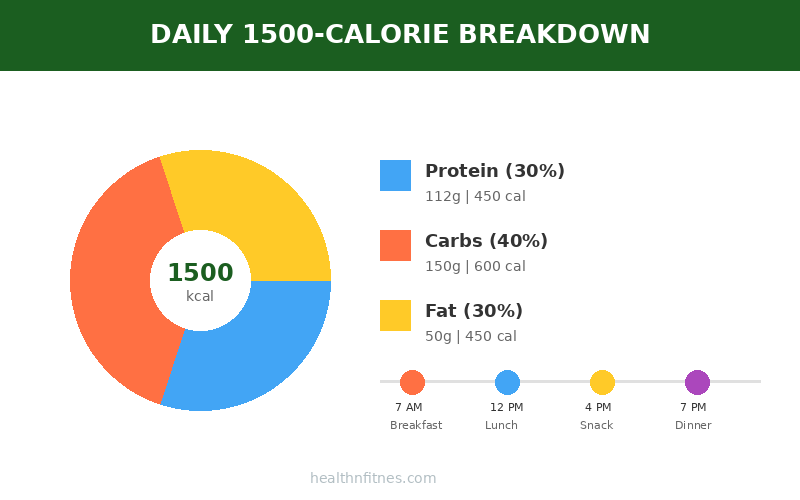
Calories alone do not determine the quality of your diet. The distribution of macronutrients, specifically protein, carbohydrates, and fat, plays a critical role in how your body responds to a calorie deficit. This plan uses a 30/40/30 macro split optimized for fat loss while preserving muscle.
Protein: 30% (112 grams, 450 calories)
High protein intake is essential during a calorie deficit. Protein preserves lean muscle mass, increases satiety between meals, and has the highest thermic effect of any macronutrient, meaning your body burns more calories digesting protein than it does processing carbohydrates or fat. Each meal in this plan contains 25 to 35 grams of high-quality protein from sources like chicken breast, salmon, eggs, Greek yogurt, and legumes.
Carbohydrates: 40% (150 grams, 600 calories)
Carbohydrates provide the energy your brain and muscles need to function optimally. This plan prioritizes complex carbohydrates from whole grains, fruits, and vegetables that digest slowly and provide sustained energy without blood sugar spikes. Fiber-rich carbohydrate sources also support digestive health and enhance the feeling of fullness after meals.
Fat: 30% (50 grams, 450 calories)
Healthy fats are vital for hormone production, nutrient absorption, and brain function. This plan includes monounsaturated fats from olive oil and avocados, omega-3 fatty acids from salmon and walnuts, and moderate amounts of saturated fat from eggs and lean meat. Never reduce fat intake below 20 percent of total calories, as this can disrupt hormone balance and impair overall health.
Daily Calorie Distribution by Meal
| Meal | Calories | Protein | Carbs | Fat |
| Breakfast (7 AM) | 350 kcal | 25g | 40g | 12g |
| Morning Snack (10 AM) | 150 kcal | 10g | 15g | 7g |
| Lunch (12:30 PM) | 450 kcal | 35g | 45g | 15g |
| Afternoon Snack (3:30 PM) | 150 kcal | 8g | 18g | 6g |
| Dinner (7 PM) | 400 kcal | 34g | 32g | 10g |
| DAILY TOTAL | 1500 kcal | 112g | 150g | 50g |
The Complete 7-Day Meal Plan for Weight Loss
Each day is designed to total approximately 1500 calories with the 30/40/30 macro split. All recipes use simple ingredients and take 15 to 30 minutes to prepare. Feel free to swap meals between days if you prefer certain foods, as long as the daily calorie total stays consistent.
Day 1: Monday
Start the week strong with a fiber-rich breakfast of overnight oats made with rolled oats, almond milk, chia seeds, and mixed berries. For lunch, enjoy a grilled chicken breast salad with mixed greens, cherry tomatoes, cucumber, and a light olive oil vinaigrette. Your afternoon snack is an apple with two tablespoons of natural almond butter. Dinner features baked salmon with roasted broccoli and a small portion of brown rice. The salmon provides excellent omega-3 fatty acids that support fat metabolism and reduce inflammation.
Day 2: Tuesday
Begin with a Greek yogurt parfait layered with granola, sliced banana, and a drizzle of honey. Lunch is a whole wheat turkey wrap with lettuce, tomato, avocado, and mustard. Snack on a handful of mixed nuts and a small orange. For dinner, prepare herb-seasoned chicken breast with steamed asparagus and roasted sweet potato wedges. The sweet potato provides slow-digesting carbohydrates that keep you satisfied throughout the evening.
Day 3: Wednesday
Wednesday starts with an egg white omelette filled with spinach, bell peppers, and feta cheese alongside a slice of whole grain toast. Lunch features a quinoa bowl with black beans, corn, diced tomatoes, and lime cilantro dressing. Enjoy carrot sticks with hummus as your snack. Dinner is whole wheat shrimp pasta with garlic, cherry tomatoes, and a light lemon butter sauce. Keep the pasta portion to one cup cooked to stay within your calorie target.
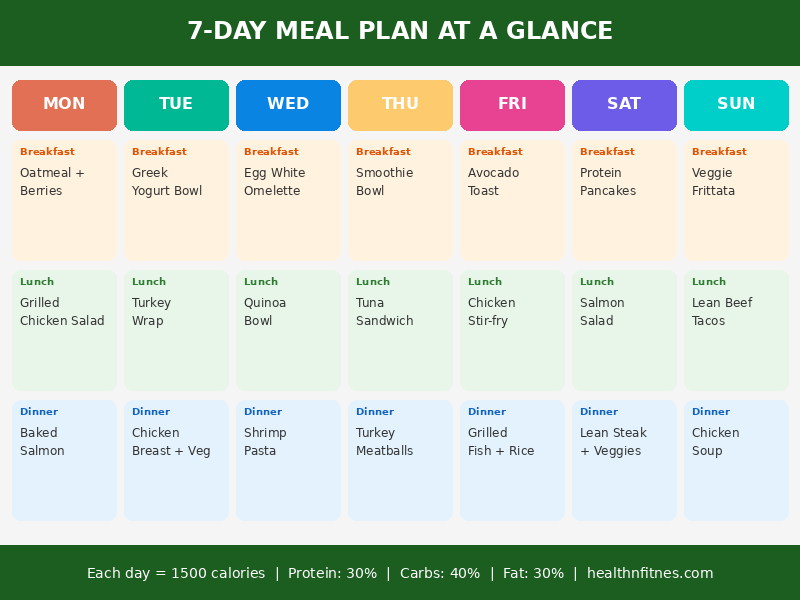
Day 4: Thursday
Start with a tropical smoothie bowl made with frozen mango, banana, protein powder, and topped with sliced almonds and coconut flakes. Lunch is a tuna sandwich on whole grain bread with light mayo, lettuce, and tomato. Snack on Greek yogurt with a sprinkle of cinnamon. Dinner features lean turkey meatballs in marinara sauce served over zucchini noodles, offering a satisfying low-carb alternative to traditional pasta.
Day 5: Friday
Celebrate the end of the work week with avocado toast on sourdough bread topped with a poached egg and everything bagel seasoning. Lunch is a chicken stir-fry with colorful bell peppers, snap peas, and a light soy ginger sauce over cauliflower rice. Enjoy a protein bar or a small handful of trail mix as your afternoon snack. Dinner is grilled white fish with lemon herb seasoning, steamed green beans, and a small serving of jasmine rice.
Day 6: Saturday
Weekend mornings deserve something special. Make protein pancakes using oat flour, egg whites, and protein powder, topped with fresh strawberries and a small amount of pure maple syrup. Lunch features a large salmon salad with mixed greens, avocado, edamame, and sesame ginger dressing. Snack on celery sticks with peanut butter. For dinner, enjoy lean sirloin steak strips with roasted vegetables including zucchini, bell peppers, and red onion.
Day 7: Sunday
Close the week with a veggie-loaded frittata made with eggs, spinach, mushrooms, and goat cheese. Lunch is lean beef tacos in corn tortillas with salsa, shredded lettuce, and a squeeze of lime. Your snack is a rice cake with almond butter and banana slices. Sunday dinner is a comforting chicken and vegetable soup with whole grain bread on the side. Use this meal prep opportunity to cook extra chicken and grains for the following week.
Meal Prep Tips for the Week
Successful meal planning requires strategic preparation. Dedicating two to three hours on Sunday afternoon to prep ingredients for the entire week dramatically increases your adherence to the plan and saves significant time during busy weekdays. Start by batch cooking your protein sources. Grill or bake enough chicken breast and salmon to last three to four days, storing portions in airtight containers in the refrigerator. Cook a large pot of brown rice or quinoa that can be portioned throughout the week. Wash and chop all vegetables so they are ready to use in salads, stir-fries, and side dishes.
Prepare overnight oats for three mornings at once by assembling individual jars with oats, milk, and toppings. Hard boil a dozen eggs for quick breakfasts and protein-rich snacks. Pre-portion nuts, seeds, and trail mix into small bags or containers to grab on the go, preventing mindless overeating from large bags. Invest in a quality set of glass meal prep containers in various sizes. Label each container with the day and meal to eliminate decision fatigue. Having everything prepared and organized makes it nearly effortless to eat according to plan, even on your busiest days.
Weekly Grocery Shopping List
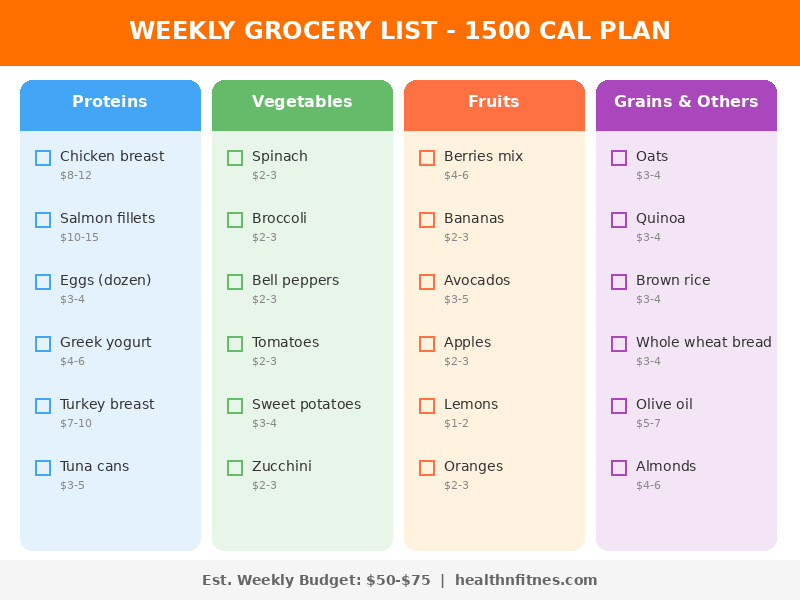
A well-organized grocery list prevents impulse purchases and keeps your budget in check. This complete list covers every ingredient needed for the full seven days. Estimated weekly cost ranges from 50 to 75 dollars depending on your location and store choices. Buy seasonal produce for the best value and quality.
| Proteins | Vegetables | Fruits | Grains & Others |
|---|---|---|---|
| Chicken breast (1.5 lb) | Spinach (1 bag) | Mixed berries | Rolled oats |
| Salmon fillets (1 lb) | Broccoli (2 heads) | Bananas (6) | Quinoa (1 lb) |
| Eggs (1 dozen) | Bell peppers (4) | Avocados (3) | Brown rice (1 lb) |
| Greek yogurt (32 oz) | Tomatoes (1 lb) | Apples (4) | Whole wheat bread |
| Turkey breast (1 lb) | Sweet potatoes (3) | Lemons (4) | Extra virgin olive oil |
| Tuna cans (3) | Zucchini (3) | Oranges (4) | Almonds (8 oz) |
Foods to Avoid on a 1500-Calorie Plan
When operating on a calorie budget, every food choice matters. Certain foods deliver minimal nutritional value while consuming a disproportionate share of your daily calories. Sugary beverages are the single biggest offender. A regular soda contains 140 calories with zero nutritional benefit, nearly 10 percent of your entire daily allowance wasted on empty sugar. Processed snacks like chips, cookies, and candy bars pack hundreds of calories into small portions that barely register as satisfying. A single candy bar can contain 250 to 300 calories, the equivalent of an entire meal on this plan. Replace these with whole food alternatives like fruit, nuts, or yogurt that provide both calories and essential nutrients.
Fried foods dramatically increase calorie density. A baked chicken breast contains approximately 165 calories, while the same piece breaded and deep-fried jumps to over 350 calories. Similarly, creamy sauces, excessive cheese, and oil-heavy dressings can turn a healthy salad into a 700-calorie meal. Choose grilled, baked, or steamed cooking methods and use light dressings sparingly. Alcohol deserves special mention. Each gram of alcohol contains 7 calories, almost as energy-dense as fat. A glass of wine adds 125 calories, a pint of beer adds 200, and cocktails with mixers can exceed 300 calories each. If you choose to drink during this plan, account for alcohol calories by reducing food portions elsewhere that day.
Common Mistakes to Avoid
The most frequent mistake on a 1500-calorie plan is inaccurate portion measurement. What looks like one tablespoon of olive oil is often two or three, adding 100 to 200 untracked calories. Invest in a digital kitchen scale and measuring cups during the first two weeks until you develop an accurate eye for portion sizes.
Skipping meals to save calories for later inevitably backfires. Going too long without eating leads to excessive hunger that triggers overeating at the next meal. Stick to the structured meal timing in this plan, eating every three to four hours to maintain stable blood sugar and prevent energy crashes.Drinking insufficient water is another common oversight. Mild dehydration often masquerades as hunger, causing you to eat when your body actually needs fluids. Aim for at least eight glasses of water daily, and drink a full glass before each meal. Research shows this simple habit can reduce calorie intake at meals by 75 to 90 calories.
Finally, expecting linear progress leads to unnecessary frustration. Body weight fluctuates daily due to water retention, hormonal cycles, and digestive contents. A person can easily weigh 1 to 2 kilograms more after a high-sodium dinner compared to the previous morning. Focus on weekly averages rather than daily numbers, and trust the process when your adherence is consistent.
Frequently Asked Questions
Q1: Is 1500 calories enough for everyone?
A 1500-calorie plan works well for most women and sedentary to moderately active men seeking weight loss. However, very active individuals, tall people, or those with physically demanding jobs may need more calories. Men over 6 feet tall or anyone exercising intensely for more than an hour daily should consider a 1700 to 1800 calorie plan instead. Consult a healthcare professional if you are unsure about the right calorie target for your specific situation.
Q2: Can I swap meals between different days?
Absolutely. The daily calorie totals are designed to be interchangeable. If you prefer the Tuesday lunch over the Thursday lunch, feel free to swap them. The only guideline is to maintain the approximate calorie total for each meal slot. Swapping a 350-calorie breakfast with a 450-calorie lunch will throw off your daily balance. Stick to swapping within the same meal category for best results.
Q3: How much weight can I lose in 7 days on this plan?
Most people can expect to lose 0.5 to 1 kilogram of actual body fat in the first week. However, the scale may show a larger drop of 1.5 to 3 kilograms because you will also lose water weight, especially if your previous diet was high in sodium and processed foods. After the initial week, a consistent loss of 0.5 to 0.75 kilograms per week is healthy and sustainable. Results vary based on starting weight, activity level, and metabolic rate.
Q4: Can I follow this plan if I am vegetarian or vegan?
Yes, with modifications. Replace animal proteins with plant-based alternatives such as tofu, tempeh, lentils, chickpeas, edamame, and seitan. Swap Greek yogurt for coconut or soy yogurt. Use plant-based protein powder in smoothie bowls. The key is maintaining the protein target of 112 grams daily, which requires intentional planning with plant proteins since they are generally less protein-dense than animal sources.
Q5: Should I exercise while following this meal plan?
Moderate exercise significantly enhances results from this meal plan. Combining a calorie deficit with regular physical activity increases total calorie burn, preserves muscle mass, and improves cardiovascular health. Aim for 150 minutes of moderate activity per week, such as brisk walking, cycling, or our 30-day home workout plan. However, avoid extremely intense exercise on 1500 calories, as this may leave you under-fueled and lead to excessive fatigue or muscle loss.
Conclusion
A well-structured 1500-calorie meal plan is one of the most effective and sustainable approaches to weight loss. This 7-day plan gives you the complete roadmap: balanced macronutrients at every meal, a diverse rotation of satisfying recipes, a ready-made grocery list, and practical strategies to stay on track throughout the week.
The science behind moderate calorie deficits is clear and well-established. By eating 1500 calories of nutrient-dense whole foods, you create the conditions for your body to burn stored fat while maintaining energy, muscle mass, and overall health. There are no extreme restrictions, no complicated formulas, and no expensive supplements required. Your next step is simple. Print the grocery list, shop for week one ingredients, and start meal prepping on Sunday. Pair this nutrition plan with our home workout guide and sleep optimization tips on healthnfitnes.com for a complete wellness approach that delivers real, lasting results. The best diet is the one you can actually follow, and this plan is designed to make healthy eating easy, delicious, and effective.