I still remember the guilt of wasting money on gym memberships I barely used. The first time, I was full of motivation. New shoes, new clothes, big plans. That excitement lasted exactly three weeks. The second time, I thought paying for a full year would force me to stay consistent. It didn’t. I went for six weeks, then slowly stopped. My gym card stayed in my wallet for the next ten months, silently reminding me of my failure. What hurt the most wasn’t the money. It was the feeling that maybe I just wasn’t disciplined enough.
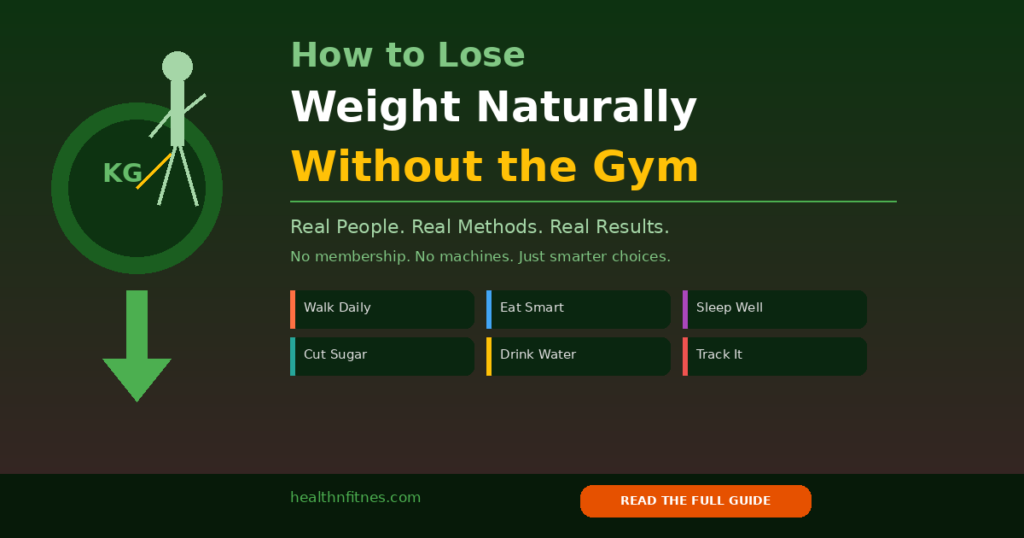
Then something unexpected happened. A friend of mine lost 8 kg in just three months. She didn’t join a gym. She didn’t follow any extreme diet. She simply walked every evening, stopped drinking soda, and made a few small changes at home. I couldn’t believe it. But I decided to try the same approach. I stopped chasing complicated plans and focused on simple habits that helped me Lose Weight at Home Without Gym.
Slowly, my body started to change. Over the next eight months, I lost 11 kg. No trainer. No treadmill. No painful early morning alarms. Just realistic changes that fit into my normal life. If you’ve ever felt stuck, unmotivated, or tired of wasting money on things that don’t work, this guide will show you exactly how to lose weight at home without a gym, step by step.
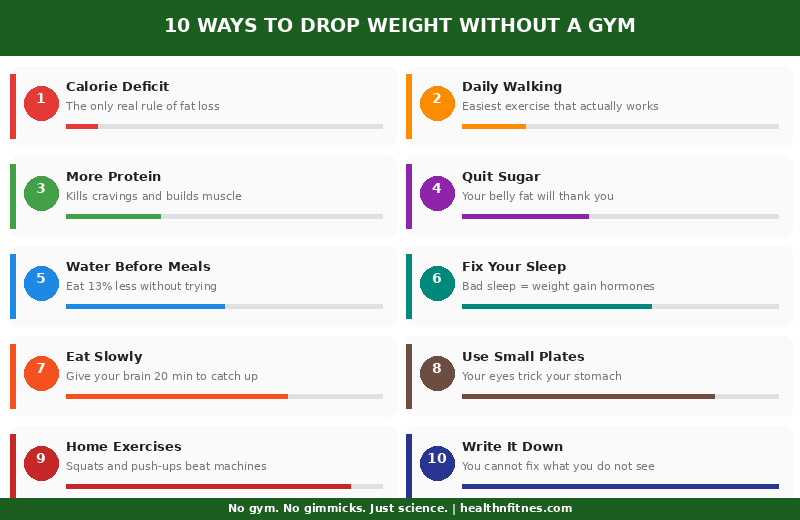
The One Rule You Cannot Ignore (Calorie Deficit)
Every diet, every weight loss plan, every miracle tea they all come down to one thing. You have to eat less energy than your body uses. That gap is called a calorie deficit. Nothing else matters if you do not get this right.
Your body burns calories just keeping you alive. Breathing, pumping blood, thinking, digesting food. For most adults that is around 1400 to 1800 calories per day, depending on your size. Add in walking, cleaning, cooking, and your regular daily movement, and most people burn between 1800 and 2400 calories without any dedicated exercise. Now here is the math that changed my life. If I eat 1700 calories instead of 2200, that is a 500-calorie gap every day. Over a week, that adds up to 3500 calories. And about 3500 calories equals roughly half a kilo of body fat. Do that for a month and two kilos are gone. Two months, four kilos gone. Without touching a single gym machine. I did not count every calorie obsessively. I just became aware. I swapped fried food for grilled. I stopped eating the third roti. I cut the biscuits at chai time. Small stuff, but it adds up shocking fast.
Walk Like You Mean It
I used to think walking was for old people. Turns out it is one of the most effective weight loss tools that exists. Harvard Medical School has data showing a 70 kg person burns around 150 calories in a 30-minute walk at normal speed. Do that morning and evening and you have torched 300 extra calories without even breathing hard.
I started walking after dinner every night. Thirty to forty minutes, nothing intense, just moving. Within two weeks the scale started shifting. Over a month I was down 1.5 kg from walking alone. My sleep got better too, and my digestion improved because I was not crashing on the couch right after eating. Aim for 8000 to 10000 steps a day. Sounds like a lot but most people already get 3000 to 4000 without trying. One dedicated 30-minute walk fills the gap. Put on a podcast, call a friend, or just enjoy the quiet. It does not feel like exercise and that is exactly why it works long term.
Put Protein on Every Plate
Here is something I wish I knew years ago. When you eat protein, your body works harder to digest it. Like 20 to 30 percent harder compared to carbs. So out of every 100 calories of chicken or paneer, your body only absorbs about 70 to 80. Free calorie burning just from eating.
But the real magic is how full you feel. Two eggs and toast for breakfast kept me satisfied until lunch. A bowl of cornflakes? I was raiding the kitchen by 10:30. Once I started putting some kind of protein in every meal eggs, dal, curd, chicken, paneer, a handful of almonds my snacking basically stopped on its own.
Ditch the Sugar (Your Belly Will Shrink)
Sugar was my biggest enemy and I had no idea. Every time you eat sugar, your blood sugar shoots up, your body pumps out insulin, and insulin is basically a hormone that tells your body to store fat. Especially around your stomach.
I did not quit sugar completely. I am not a robot. But I stopped putting three spoons in my chai, I cut out cold drinks during meals, and I said no to the office biscuit tin. Just those three changes I dropped 2 kg in the first month. Two kilos from sugar alone. My pants fit noticeably better by week three.
Drink Water Before You Eat
This one sounded too easy to actually work. But a study published in the journal Obesity tracked people who drank about 500 ml of water twenty minutes before each meal. Those people ate 13 percent less food and lost 44 percent more weight over 12 weeks compared to the group that did not drink water first.
I started keeping a bottle on my desk and drinking a full glass before lunch and dinner. I ate less without even thinking about it. My stomach was already partly full by the time food hit the table. Some weeks I even forgot I was doing it. It just became a habit. Aim for 2 to 3 liters a day. Your skin will look better too.
Fix Your Sleep or Nothing Else Matters
This one blew my mind. When you sleep less than 6 hours, your body makes more ghrelin, which is the hormone that screams at you to eat. At the same time it makes less leptin, which is the one that says hey, you are full, stop. So you wake up hungry and your willpower is completely shot because you are running on fumes.
Researchers at the University of Chicago found that sleep-deprived people ate nearly 400 extra calories the next day. That is an entire extra meal just because they slept badly. Over a week, that is 2700 Calories of bonus eating. I fixed my sleep by turning off my phone at 10 PM, keeping my room cold, and sticking to the same bedtime. The weight loss got noticeably faster after that.
Stop Eating So Fast
Your brain needs about 20 minutes to figure out that your stomach is full. If you inhale your meal in five minutes, you have eaten way too much before your brain even got the message. I used to demolish a plate of food while everyone else was still halfway through theirs.
Now I put my spoon down between bites. I chew properly. I sip water during the meal. Tiny changes, but I eat about 20 to 25 percent less at every sitting without feeling like I am restricting myself. My stomach just catches up to my mouth now.
Smaller Plates, Smaller You
Sounds dumb. Works brilliantly. When you put a normal portion on a big plate, it looks sad and tiny. Your brain goes oh no, that is not enough. Same portion on a smaller plate? It looks like a full meal. Your eyes trick your stomach.
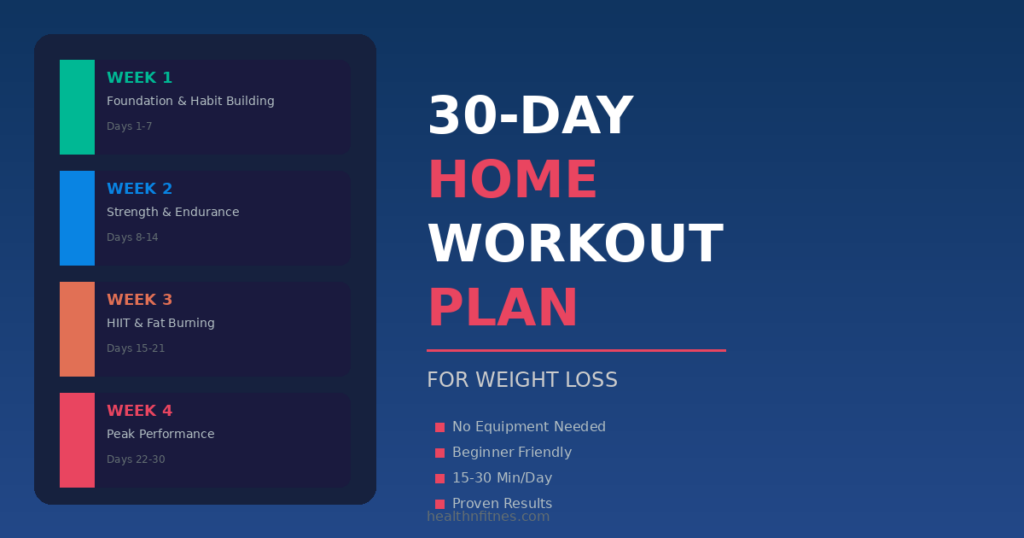
Read More: 30-Day Home Workout Plan for Weight Loss (No Equipment Needed)
Cornell University researchers found that switching from a 12-inch plate to a 10-inch plate cut calorie intake by 22 percent. Nobody in the study felt hungrier. They just ate less because it looked like more. I swapped our dinner plates at home and genuinely forgot I had done it after a week. The portions just looked right.
Home Workouts Beat the Gym (Fight Me)
Your body is the only gym equipment you actually need. Squats, push-ups, lunges, planks, and mountain climbers hit every major muscle group. A 15-minute session on your living room floor burns 80 to 150 calories. Do that three to five times a week and you have added a serious boost to your calorie deficit.
Building a little bit of muscle also speeds up your metabolism. Muscle burns more calories at rest than fat does. So the stronger you get, the more calories you burn just sitting on the couch watching cricket. Check out our 10-minute morning workout guide on healthnfitnes.com if you want a complete routine to follow.
Write Everything Down
When I started keeping a simple food diary on my phone, I discovered something shocking. My afternoon snacking was adding 400 to 500 calories every single day. I had absolutely no idea until I wrote it down. Once I could see it, cutting back was easy.
You do not need a fancy app. A note on your phone works. Take a photo of every meal if writing is too much effort. The point is awareness. You cannot fix a problem you cannot see. Most people have one or two blind spots in their eating that are silently adding hundreds of calories a day.
What Your Month Will Look Like
Here is a rough timeline based on what I experienced and what most people report.
| When | Weight Lost | How You Feel | What to Focus On | Difficulty |
|---|---|---|---|---|
| Week 1-2 | 1-2 kg | Clothes a bit looser | Water + sugar cut | Getting used to it |
| Week 3-4 | 1-1.5 kg more | Face looks thinner | Add protein + walks | Feels easier |
| Month 2 | 2-3 kg more | People start asking | All methods together | Becoming normal |
| Month 3 | 2-3 kg more | Belt needs new hole | Maintain and enjoy | Autopilot |
| Total | 7-10 kg | Different person | Lifestyle now | Easy |
Frequently Asked Questions
Can you actually lose weight without going to a gym?
Yes, and it is more common than you think. Most weight loss comes from what you eat, not where you exercise. Walking, home workouts, and eating smarter handle 90 percent of the job. The gym is helpful but nowhere near necessary. I dropped 11 kg without stepping foot in one.
How many kilos can I lose in a month without a gym?
If you maintain a 500-calorie daily deficit through diet and walking, 2 to 4 kg per month is realistic. Some people lose more in month one because of water weight. After that it steadies out to a consistent pace that your body can handle without crashing.
What is the quickest way to start losing weight at home?
Cut sugar. Start walking after meals. Drink water before you eat. These three changes alone create a noticeable deficit within the first week. You do not need to overhaul your entire life on day one. Pick two or three things from this list and stack more on as each one becomes a habit.
Is it enough to just walk every day?
Walking handles the exercise side, but you still need to eat less than you burn. Walking alone creates a small deficit. Walking plus eating smarter creates a big one. Together they are way more powerful than either one by itself.
Do I have to count every single calorie?
No, and honestly most people who try to count every calorie burn out within two weeks. A simpler approach works better. Use smaller plates. Eat protein at every meal. Cut snacking. Pay attention to when you are full instead of eating until the plate is clean. Most people end up in a deficit naturally this way.
Conclusion
The fitness industry wants you to believe you need a gym. You do not. You need a pair of shoes for walking, a kitchen where you make slightly better choices, and enough discipline to go to bed on time. That is the whole thing.
Pick two methods from this list. Just two. Try them for a week. If the scale moves even half a kilo, you will be motivated enough to add a third. Then a fourth. Before you know it, these are not methods anymore. They are just how you live.
Three months from now you will either be glad you started or wishing you had. And both of those people are reading this exact sentence right now.