
What They Are | How Much You Need | Best Sources | Ideal Ratios for Every Goal
There are three main parts to every piece of food you eat: protein, carbs, and fat. These nutrients give your body the energy it needs to move, think, heal, and stay alive. Each one is important and can’t be replaced when it comes to your health, performance, and body composition.
You’re not the only one who has ever been unsure about what to eat. People commonly say that carbs make you gain weight. Some people say that fat is bad for you. People typically laud protein but don’t understand it. The truth is that your body requires all three of these things in the appropriate amounts.
This Complete Guide to Macronutrients will explain what protein, carbohydrates, and fat do in your body, why they are important, and how to use them properly to help you reach your health and fitness objectives. Learning about macronutrients is one of the most useful things you can do to reach your goals, whether they are to lose weight, increase muscle, or just feel better and have more energy. You can stop guessing or following diet trends once you know how they function and can make better eating choices with confidence.
Despite their importance, macronutrients are surrounded by confusion and misinformation. Low-carb advocates demonize carbohydrates, while low-fat proponents blame dietary fat for weight gain. The truth, as supported by decades of nutritional science, is that all three macronutrients are essential, and the optimal balance depends on your individual goals, activity level, and body type. This comprehensive guide breaks down everything you need to know about protein, carbs, and fat so you can make informed nutritional decisions with confidence.
What Are Macronutrients?
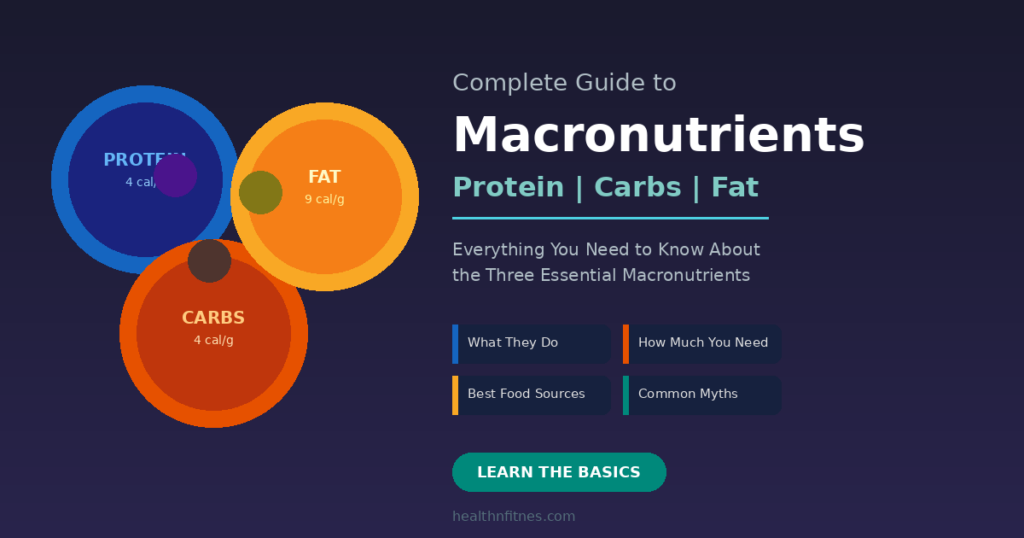
Macronutrients are nutrients that your body requires in large quantities to sustain life and maintain normal biological functions. The prefix macro means large, distinguishing them from micronutrients like vitamins and minerals that are needed in much smaller amounts. The three macronutrients are protein, carbohydrates, and fat, and each provides a specific number of calories per gram. Protein and carbohydrates each provide 4 calories per gram, while fat provides 9 calories per gram, making it the most energy-dense macronutrient. Alcohol, though not technically a macronutrient, provides 7 calories per gram and is sometimes discussed alongside macros. Your total daily calorie intake is simply the sum of calories from all three macronutrients consumed throughout the day.
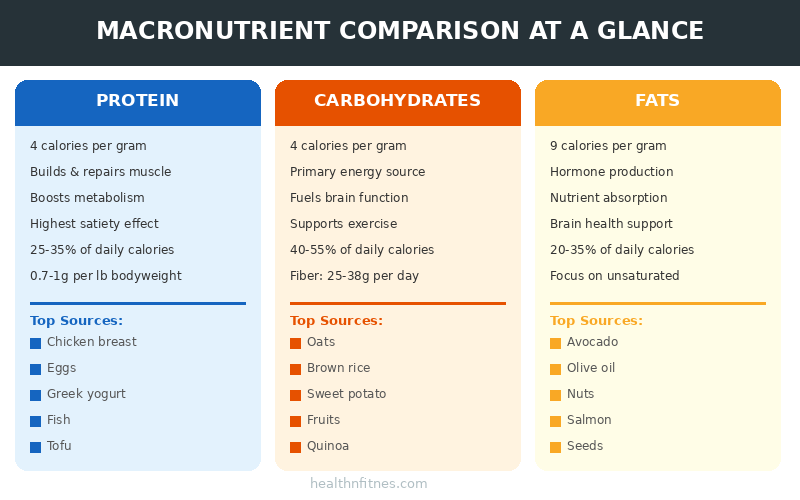
Beyond providing energy, each macronutrient serves distinct biological functions that cannot be replaced by the other two. This is why extreme diets that eliminate an entire macronutrient group almost always lead to health problems, poor performance, and eventual failure. The goal is not elimination but optimization, finding the right balance that supports your specific needs.
Protein: The Building Block
Protein is arguably the most important macronutrient for body composition and overall health. Composed of amino acids, protein serves as the primary structural component of muscle tissue, skin, hair, nails, organs, and enzymes. Your body uses 20 different amino acids to build proteins, nine of which are classified as essential because your body cannot produce them and must obtain them from food.
How Much Protein Do You Need?
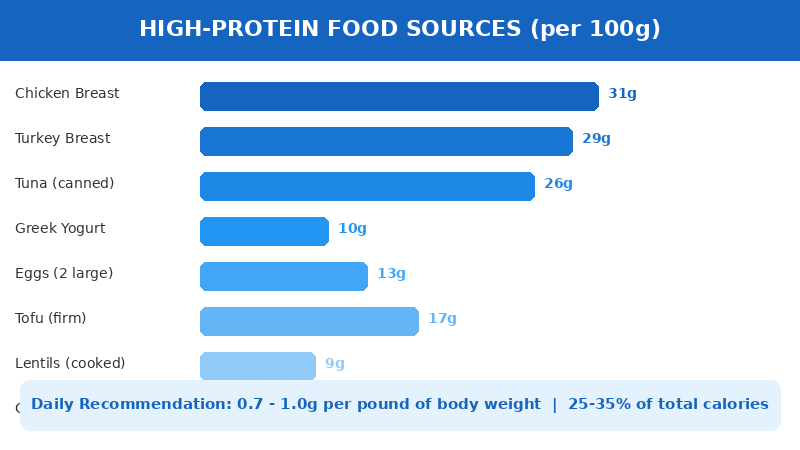
The recommended dietary allowance of 0.36 grams per pound of body weight is widely considered insufficient for anyone with fitness or body composition goals. Current sports nutrition research consistently recommends 0.7 to 1.0 grams per pound of body weight for active individuals, and up to 1.2 grams per pound during aggressive weight loss phases to prevent muscle loss. For a 160-pound person, this translates to 112 to 160 grams of protein daily.
Why Protein Matters for Weight Loss
Protein is the most thermogenic macronutrient. Your body burns approximately 20 to 30 percent of protein calories during digestion, compared to just 5 to 10 percent for carbohydrates and 0 to 3 percent for fat. This means eating 100 calories of protein results in only 70 to 80 net calories after digestion. Protein also has the highest satiety effect, meaning it keeps you feeling full longer than equivalent calories from carbs or fat. Studies consistently show that increasing protein intake to 30 percent of total calories reduces overall food consumption by 10 to 15 percent without any conscious effort to eat less.
Best Protein Sources
Animal sources provide complete proteins containing all nine essential amino acids in optimal ratios. Chicken breast leads with 31 grams per 100 grams, followed by turkey breast at 29 grams, and canned tuna at 26 grams. Eggs, often called the gold standard of protein quality, provide 13 grams per two large eggs with an exceptional amino acid profile. For plant-based eaters, firm tofu delivers 17 grams per 100 grams, lentils provide 9 grams per cooked cup, and combining grains with legumes creates complete amino acid profiles comparable to animal sources.
Carbohydrates: Your Body’s Fuel
Carbohydrates are your body’s preferred and most efficient energy source. When you eat carbs, your digestive system breaks them down into glucose, which enters your bloodstream and fuels every cell in your body. Your brain alone consumes approximately 120 grams of glucose daily, accounting for roughly 60 percent of the body’s total glucose utilization at rest.
Simple vs. Complex Carbohydrates
Not all carbohydrates are created equal. Simple carbohydrates found in sugar, white bread, candy, and soda are rapidly digested, causing sharp spikes in blood sugar followed by energy crashes. Complex carbohydrates found in whole grains, oats, sweet potatoes, and legumes break down slowly, providing sustained energy over several hours without the roller coaster of blood sugar fluctuations. A nutrition-conscious diet should prioritize complex carbohydrates for 80 to 90 percent of carb intake, reserving simple carbs for specific situations like post-workout recovery.
The Critical Role of Fiber
Fiber is a type of carbohydrate that your body cannot fully digest, yet it plays crucial roles in digestive health, blood sugar regulation, cholesterol management, and appetite control. The recommended daily fiber intake is 25 grams for women and 38 grams for men, yet most people consume only 15 grams. Increasing fiber intake through vegetables, fruits, legumes, and whole grains is one of the simplest and most impactful nutritional improvements most people can make.
Fat: The Essential Nutrient
Dietary fat has been unfairly vilified for decades, but modern nutritional science has firmly established that fat is not the enemy of health or weight loss. Fat is essential for hormone production including testosterone and estrogen, absorption of fat-soluble vitamins A, D, E, and K, brain health and cognitive function, cell membrane integrity, and insulation of vital organs.
Types of Dietary Fat
Monounsaturated fats found in olive oil, avocados, and almonds are considered the healthiest fats and are linked to reduced heart disease risk and improved insulin sensitivity. Polyunsaturated fats, particularly omega-3 fatty acids from salmon, sardines, walnuts, and flaxseeds, have powerful anti-inflammatory properties and support brain health. Saturated fats from meat, dairy, and coconut oil should be consumed in moderation, limited to roughly 10 percent of total calories. Trans fats, found in processed foods and partially hydrogenated oils, should be avoided entirely as they significantly increase cardiovascular disease risk.
READ MORE: Yoga for Beginners 2025: Complete Guide to Start Your Yoga Journey at Home
How Much Fat Do You Need?
A healthy fat intake ranges from 20 to 35 percent of total daily calories. For someone eating 2000 calories per day, this translates to 44 to 78 grams of fat. Never drop below 20 percent of calories from fat, as this can disrupt hormone production, impair nutrient absorption, and negatively affect mood and cognitive function. Focus on getting the majority of your fat from unsaturated sources while limiting saturated fat and completely eliminating trans fats.
Macronutrient Comparison Table
| Property | Protein | Carbohydrates | Fat |
|---|---|---|---|
| Calories per gram | 4 | 4 | 9 |
| Primary function | Build & repair tissue | Energy source | Hormones & absorption |
| Daily % of calories | 25-35% | 40-55% | 20-35% |
| Thermic effect | 20-30% | 5-10% | 0-3% |
| Satiety level | Highest | Moderate | Low-Moderate |
| Storage form | Muscle tissue | Glycogen (liver/muscle) | Adipose tissue (body fat) |
| Top sources | Chicken, fish, eggs, tofu | Oats, rice, fruits, veggies | Avocado, olive oil, nuts |
Ideal Macro Ratios by Fitness Goal
There is no single ideal macro ratio that works for everyone. The optimal distribution depends on your specific fitness goal, activity level, and individual metabolism. Here are evidence-based starting points for the four most common goals.
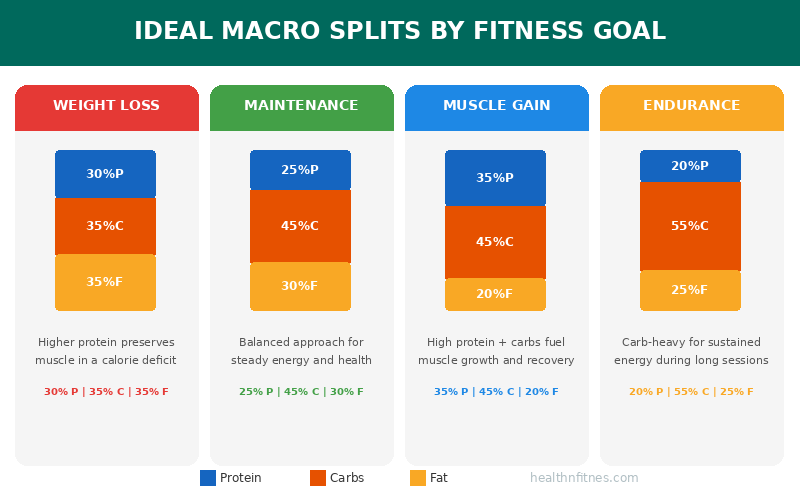
For weight loss, a ratio of 30 percent protein, 35 percent carbohydrates, and 35 percent fat maximizes satiety and muscle preservation during a calorie deficit. The higher protein and fat proportions help control hunger while ensuring your body has adequate resources to maintain lean muscle mass as you lose weight. For general health maintenance, a balanced 25 percent protein, 45 percent carbohydrates, and 30 percent fat split provides sustainable energy and supports all bodily functions without emphasizing any single goal. This is the closest to a universal recommendation and works well for moderately active adults.
READ MORE: Lose Weight at Home Without Gym: 10 Things That Actually Worked for Me
For muscle gain, increase protein to 35 percent and carbohydrates to 45 percent while reducing fat to 20 percent. The elevated carbohydrate intake fuels intense training sessions and supports muscle glycogen replenishment, while high protein provides the amino acids necessary for muscle protein synthesis. For endurance athletes, carbohydrates should dominate at 55 percent, with protein at 20 percent and fat at 25 percent. Long-duration activities like marathon running, cycling, and swimming depend heavily on glycogen stores, making adequate carbohydrate intake critical for performance and recovery.
How to Calculate Your Personal Macros
Calculating your macronutrients is a straightforward three-step process. First, determine your total daily energy expenditure using an online TDEE calculator that factors in your age, weight, height, and activity level. Second, adjust this number based on your goal: subtract 300 to 500 calories for weight loss, add 200 to 300 calories for muscle gain, or maintain the number for weight maintenance.
Third, distribute your adjusted calories across the three macronutrients according to your goal-specific ratio. For example, a person eating 2000 calories for weight loss using the 30/35/35 split would eat 150 grams of protein (600 calories), 175 grams of carbohydrates (700 calories), and 78 grams of fat (700 calories). Track your intake using a free app for two to four weeks, then adjust based on your results and how you feel.
Common Macronutrient Myths Debunked
Myth: Carbs make you fat. Excess calories from any macronutrient cause weight gain, not carbohydrates specifically. Carbs are stored as glycogen, and only converted to fat when glycogen stores are completely full and calorie surplus is sustained over time. Populations consuming high-carbohydrate diets like the Japanese and Okinawans have some of the lowest obesity rates globally.
Myth: Eating fat makes you fat. This misconception stems from the fact that fat has 9 calories per gram compared to 4 for protein and carbs. However, dietary fat does not automatically become body fat. Fat is essential for hormone health, and studies consistently show that moderate-fat diets produce better long-term weight loss results than very low-fat diets because they are more satisfying and sustainable.
Myth: High protein damages your kidneys. Multiple large-scale studies, including a comprehensive review published in the Journal of the International Society of Sports Nutrition, found no evidence of kidney damage in healthy individuals consuming up to 1.5 grams of protein per pound of body weight. People with pre-existing kidney disease should consult their doctor, but for healthy adults, high protein intake is safe and beneficial.
Myth: You need to count macros to be healthy. Macro tracking is a powerful tool for specific goals but is not necessary for general health. Simply focusing on eating mostly whole, unprocessed foods, including a protein source at every meal, eating plenty of vegetables, and choosing healthy fats naturally creates a balanced macronutrient profile without counting a single gram.
Frequently Asked Questions
Q1: What is the most important macronutrient for weight loss?
Protein is the most impactful macronutrient for weight loss due to its high thermic effect, superior satiety properties, and muscle-preserving capabilities during a calorie deficit. However, all three macronutrients are necessary for health. The overall calorie deficit matters more than any single macronutrient, but optimizing protein intake within that deficit produces the best body composition results.
Q2: Can I build muscle without eating carbohydrates?
While technically possible on a very low-carb diet, building muscle is significantly harder and slower without adequate carbohydrates. Carbs replenish muscle glycogen that fuels intense resistance training, stimulate insulin release which is anabolic, and spare protein from being used as energy so it can focus on muscle repair. Most bodybuilders and strength athletes consume moderate to high carbohydrate diets for optimal muscle growth.
Q3: How do I know if my macro split is working?
Evaluate your macro split over a two to four week period using multiple indicators. Your energy levels should be stable throughout the day without crashes. Your workout performance should maintain or improve. Your body composition should trend in the desired direction, and your hunger levels should be manageable. If any of these factors are consistently poor, adjust the relevant macronutrient by 5 to 10 percentage points and reassess.
Q4: Are all calories created equal regardless of which macro they come from?
From a pure energy standpoint, a calorie is a calorie. However, the source of those calories dramatically affects satiety, hormonal response, muscle preservation, thermic effect, and nutrient density. One hundred calories from chicken breast and one hundred calories from candy have identical energy content but vastly different effects on your body composition, hunger, and health.
Q5: Should I track macros every day or is weekly averaging sufficient?
Both approaches work, but weekly averaging is more flexible and sustainable for most people. If your weekly protein averages hit target and your total calories are on point, having slightly higher carbs on training days and higher fat on rest days is perfectly fine. Daily tracking works best during the initial learning phase, after which most people develop an intuitive understanding of their portions and can switch to looser tracking.
Conclusion
Macronutrients are the foundation of every effective nutrition strategy. Protein builds and repairs your body, carbohydrates fuel your activity and brain function, and fat supports critical hormonal and cellular processes. None of them is inherently good or bad, and the optimal balance depends entirely on your unique goals and lifestyle.
The most important takeaway from this guide is that quality matters as much as quantity. Focusing on whole food sources of each macronutrient, eating adequate protein at every meal, choosing complex carbohydrates over refined ones, and prioritizing unsaturated fats will naturally create a diet that supports both your fitness goals and long-term health. Start by calculating your personal macro targets using the formulas in this guide, track your intake for two weeks to build awareness, and then adjust based on your results. Pair your improved nutrition with our home workout plan and 7-day meal plan on healthnfitnes.com for a complete approach to transforming your health and body composition.