Aging is a beautiful journey, but it comes with its own set of challenges. As we cross the milestone of 60, our body and mind undergo significant changes that demand extra attention and care. Senior wellness is not just about preventing illness; it is about living each day with energy, purpose, and joy. In 2025, with advances in medical science and a growing awareness of holistic health, seniors have more tools and knowledge than ever before to lead vibrant, fulfilling lives.
This comprehensive guide is designed specifically for adults aged 60 and above, as well as their families and caregivers. Whether you are looking for gentle exercise routines, practical nutrition advice, mental wellness strategies, or preventive healthcare schedules, this article covers it all. The goal is simple: to help you age gracefully while maintaining your independence, strength, and happiness. Senior wellness is a holistic concept that touches every aspect of life, from the food you eat to the relationships you nurture. Let us explore how small daily habits can create a powerful impact on your overall health and quality of life.
Your Complete Guide to Living a Vibrant, Active, and Fulfilling Life in Your Golden Years
Table of Contents
- Introduction: Why Senior Wellness Matters More Than Ever
- Understanding Your Body After 60: Key Changes
- Daily Exercise Routine for Seniors (Step-by-Step)
- Senior Nutrition Guide: What to Eat and What to Avoid
- Mental Health and Emotional Wellness for Seniors
- Sleep Hygiene Tips for Better Rest
- Preventive Health Checkups: A Complete Schedule
- Social Wellness: Staying Connected in Your Golden Years
- Safety Tips for Seniors at Home
- Frequently Asked Questions
Understanding Your Body After 60: Key Changes
After the age of 60, the human body goes through several natural changes. Understanding these changes is the first step toward effective senior wellness. Bone density begins to decrease, making bones more fragile and increasing the risk of fractures. Muscle mass naturally declines by about 3 to 8 percent per decade after the age of 30, and this rate accelerates after 60. Joint flexibility reduces, leading to stiffness and discomfort, especially in the knees, hips, and shoulders.
The cardiovascular system also undergoes changes. Blood vessels may become stiffer, the heart may pump slightly less efficiently, and blood pressure tends to rise. Metabolism slows down, which means the body requires fewer calories but more nutrient-dense foods. The immune system weakens, making seniors more susceptible to infections and diseases. Additionally, cognitive changes such as slower processing speed and occasional memory lapses are common, though they do not necessarily indicate dementia.
Hormonal shifts affect both men and women. Women experience post-menopausal changes that impact bone health and mood, while men may face declining testosterone levels affecting energy and muscle mass. Digestive efficiency also decreases, meaning nutrient absorption becomes less effective. Understanding all these changes empowers seniors to make informed lifestyle choices that can significantly slow down the aging process and improve their overall quality of life.
Common Age-Related Changes at a Glance
| Body System | Common Change | Impact | Prevention Strategy |
|---|---|---|---|
| Bones | Density decreases | Fracture risk increases | Calcium + Vitamin D + Weight-bearing exercise |
| Muscles | Mass declines 3-8% per decade | Weakness, falls | Resistance training + Protein intake |
| Heart | Vessels stiffen | Higher blood pressure | Cardio exercise + Low sodium diet |
| Brain | Processing slows | Memory concerns | Mental exercises + Social engagement |
| Joints | Flexibility reduces | Stiffness, pain | Yoga + Gentle stretching |
| Immune System | Weakens gradually | More infections | Balanced nutrition + Vaccinations |
| Metabolism | Slows down | Weight gain risk | Portion control + Active lifestyle |
| Digestion | Less efficient | Poor absorption | Fiber-rich diet + Probiotics |
Daily Exercise Routine for Seniors: Step-by-Step Guide
Regular physical activity is the cornerstone of senior wellness. Exercise helps maintain bone density, muscle strength, cardiovascular health, and even mental sharpness. The key for seniors is to focus on low-impact, consistent activities rather than intense workouts. Here is a safe and effective daily routine designed specifically for adults over 60.
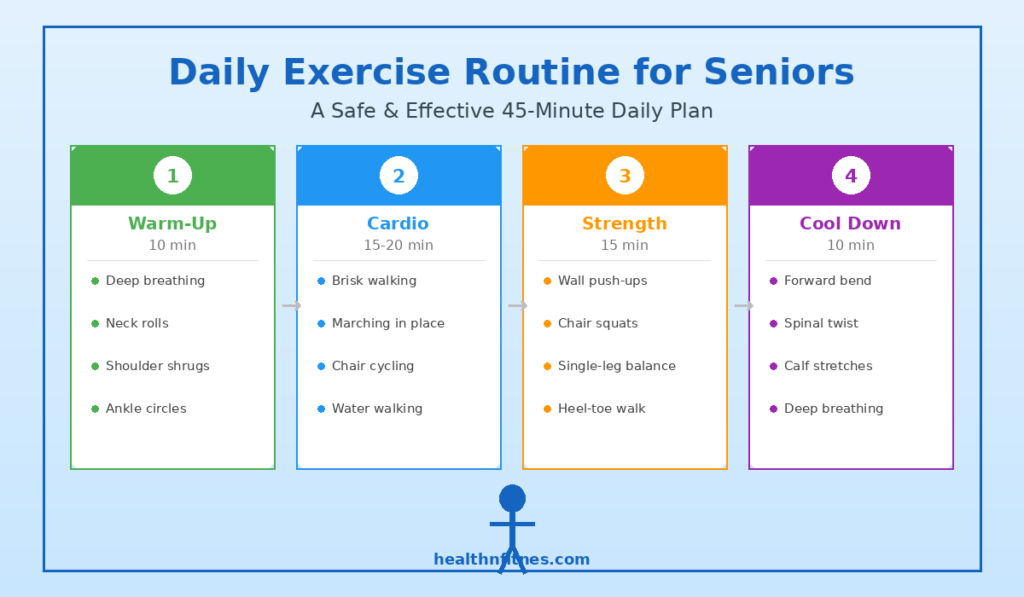
Morning Warm-Up (10 Minutes)
- Start with 2 minutes of deep breathing exercises while standing or sitting comfortably. Inhale through the nose for 4 counts, hold for 4 counts, and exhale through the mouth for 6 counts.
- Perform gentle neck rolls: 5 circles clockwise and 5 circles counter-clockwise to release tension in the neck and upper back.
- Do shoulder shrugs: raise both shoulders toward your ears, hold for 3 seconds, and release. Repeat 10 times.
- Stand near a wall for support and do ankle circles: 10 rotations per foot in each direction.
Gentle Cardio (15-20 Minutes)
- Brisk walking is the safest and most effective cardio for seniors. Walk at a pace where you can talk but feel slightly breathless.
- If outdoor walking is not possible, try marching in place while swinging your arms gently.
- Chair-based cycling movements: sit on a sturdy chair and move your legs in a pedaling motion for 5 minutes.
- Water walking or swimming, if accessible, provides excellent low-impact cardiovascular benefits.
Read More: 7-Day Meal Plan for Weight Loss (1500 Calories) | Free Printable Guide
Strength and Balance (15 Minutes)
- Wall push-ups: stand arm-length from a wall, place palms flat, and do 10-15 push-ups. This strengthens arms and chest safely.
- Chair squats: stand in front of a chair, slowly lower yourself as if sitting down, then stand back up. Do 10 repetitions.
- Single-leg balance: hold onto a chair and lift one foot off the ground. Hold for 10-15 seconds per leg. This prevents falls.
- Heel-to-toe walking: walk in a straight line placing the heel of one foot directly in front of the toes of the other foot. Take 20 steps.
Cool Down and Stretching (10 Minutes)
- Seated forward bend: sit on the edge of a chair and gently reach toward your toes. Hold for 15-20 seconds.
- Seated spinal twist: sit upright, place your right hand on your left knee, and gently twist your upper body to the left. Hold for 15 seconds. Repeat on the other side.
- Calf stretches against a wall: lean forward with hands on the wall, one foot behind, heel pressed to the floor. Hold 20 seconds per leg.
- End with 2 minutes of deep breathing and gratitude meditation.
Senior Nutrition Guide: What to Eat and What to Avoid
Nutrition plays a critical role in senior wellness. As metabolism slows and nutrient absorption becomes less efficient, it becomes essential to focus on nutrient-dense foods that provide maximum benefit per calorie. A well-balanced diet can help prevent chronic diseases, maintain a healthy weight, support brain function, and boost energy levels throughout the day.
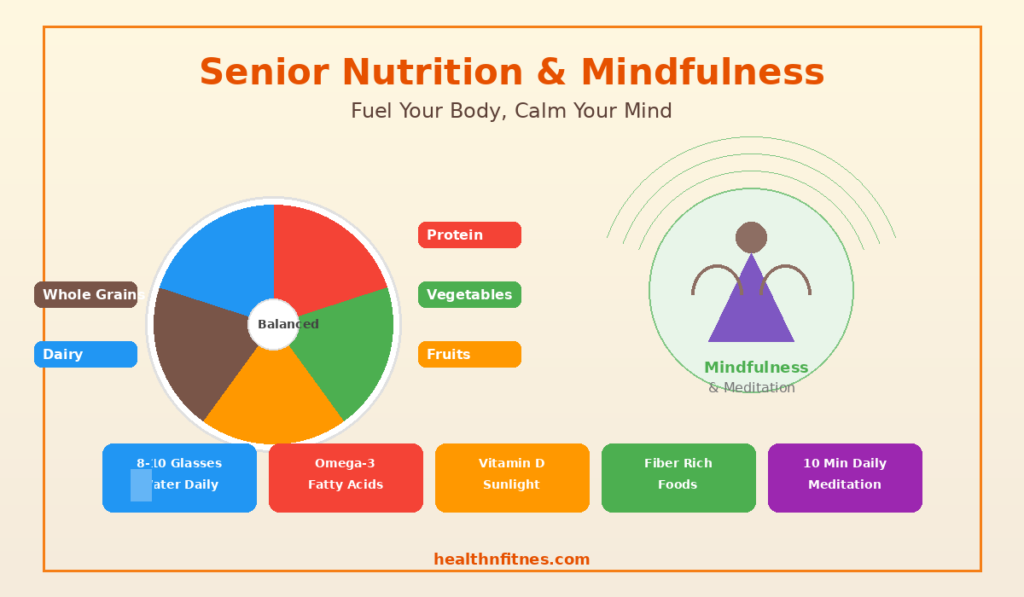
Protein is especially important for seniors as it helps maintain muscle mass and supports tissue repair. Aim for lean protein sources like chicken, fish, eggs, lentils, beans, and low-fat dairy. Calcium and Vitamin D are vital for bone health, and seniors should consume dairy products, fortified cereals, leafy greens, and get adequate sunlight exposure. Omega-3 fatty acids found in salmon, walnuts, and flaxseeds support heart and brain health. Fiber from whole grains, fruits, and vegetables aids digestion and helps prevent constipation, a common issue among older adults.
Hydration is often overlooked. Seniors may not feel thirsty as often, but dehydration can lead to confusion, urinary tract infections, and kidney problems. Aim for at least 8 glasses of water daily, supplemented by herbal teas and water-rich fruits like watermelon and cucumbers.
Daily Nutrition Chart for Seniors (Per Day)
| Nutrient | Recommended Amount | Best Food Sources | Key Benefit |
| Protein | 50-60g | Fish, eggs, lentils, chicken | Muscle maintenance |
| Calcium | 1200mg | Milk, yogurt, leafy greens | Bone strength |
| Vitamin D | 800-1000 IU | Sunlight, fortified foods, fish | Calcium absorption |
| Fiber | 25-30g | Whole grains, fruits, vegetables | Digestive health |
| Omega-3 | 1-2g | Salmon, walnuts, flaxseeds | Heart and brain health |
| Vitamin B12 | 2.4mcg | Eggs, dairy, fortified cereals | Nerve function |
| Water | 8-10 glasses | Water, herbal tea, fruits | Hydration, kidney health |
| Potassium | 2600-3400mg | Bananas, potatoes, spinach | Blood pressure control |
Foods to Avoid or Limit
- Processed and ultra-processed foods high in sodium, preservatives, and unhealthy fats that increase heart disease risk.
- Excessive sugar including sugary drinks, sweets, and desserts that can spike blood sugar levels and contribute to diabetes.
- Fried and deep-fried foods that are difficult to digest and contribute to unhealthy cholesterol levels.
- Excessive caffeine that can interfere with sleep quality and increase anxiety.
- Raw or undercooked meats and eggs that pose a higher food safety risk for seniors with weakened immune systems.
Mental Health and Emotional Wellness for Seniors
Mental health is an equally important pillar of senior wellness that is often overlooked. Depression, anxiety, loneliness, and cognitive decline are common challenges that seniors face, yet many go untreated because of stigma or lack of awareness. Maintaining good mental health is essential for overall quality of life, independence, and even physical health outcomes.
Loneliness and social isolation are among the biggest threats to senior mental health. Research shows that prolonged isolation can be as harmful as smoking 15 cigarettes a day. Seniors who live alone, have lost a spouse, or have limited mobility are especially vulnerable. Building and maintaining social connections through family visits, community groups, religious gatherings, and volunteer work can significantly improve emotional wellbeing.
Cognitive stimulation is vital for keeping the brain sharp. Activities like reading, solving puzzles and crosswords, learning a new language or instrument, playing board games, and engaging in creative hobbies like painting or writing all help strengthen neural connections and may delay the onset of cognitive decline. Digital literacy, including learning to use smartphones and social media, can also keep seniors mentally engaged and socially connected.
Mindfulness and meditation practices offer tremendous benefits for senior mental health. Even 10-15 minutes of daily meditation can reduce stress hormones, improve sleep quality, lower blood pressure, and enhance emotional resilience. Guided meditation apps, deep breathing exercises, and gentle yoga are excellent entry points for seniors new to mindfulness practices.
Sleep Hygiene Tips for Better Rest
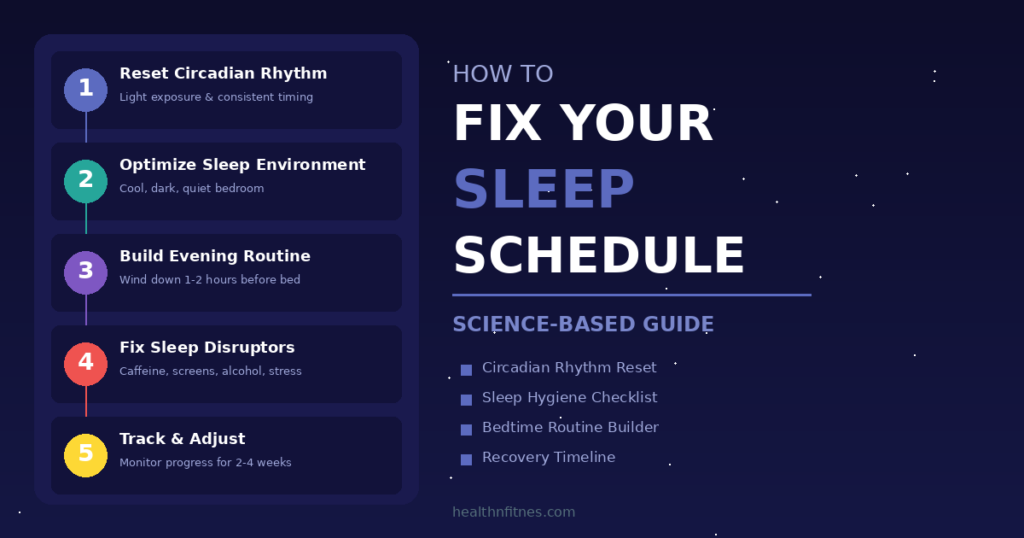
Quality sleep is fundamental to senior wellness, yet many older adults struggle with insomnia, frequent waking, and poor sleep quality. Sleep patterns naturally change with age; seniors may find themselves sleeping lighter, waking earlier, or feeling less rested. However, poor sleep is not an inevitable part of aging and can be significantly improved with proper sleep hygiene practices.
Essential Sleep Tips for Seniors
- Maintain a consistent sleep schedule by going to bed and waking up at the same time every day, including weekends. This helps regulate your internal body clock.
- Create a relaxing bedtime routine that starts 30-60 minutes before sleep. This might include reading a book, listening to soft music, gentle stretching, or taking a warm bath.
- Keep your bedroom cool, dark, and quiet. Use blackout curtains, earplugs, or a white noise machine if needed. The ideal sleep temperature is between 60-67 degrees Fahrenheit.
- Avoid screens including phones, tablets, and television at least one hour before bedtime. The blue light emitted by these devices suppresses melatonin production.
- Limit daytime naps to 20-30 minutes and avoid napping after 3 PM. Long or late naps can interfere with nighttime sleep.
- Avoid heavy meals, caffeine, and alcohol close to bedtime. While alcohol may help you fall asleep initially, it disrupts sleep quality later in the night.
Preventive Health Checkups: A Complete Schedule
Preventive healthcare is one of the most powerful tools in a senior wellness strategy. Regular health screenings can detect potential problems early when they are most treatable, saving both health complications and medical costs in the long run. Here is a recommended screening schedule for adults over 60.
Recommended Health Screening Schedule
| Health Screening | Frequency | Why It Matters |
|---|---|---|
| Blood Pressure | Every 6 months | Detects hypertension early |
| Blood Sugar (HbA1c) | Every 6-12 months | Monitors diabetes risk |
| Cholesterol Panel | Annually | Heart disease prevention |
| Bone Density (DEXA) | Every 2 years | Osteoporosis screening |
| Eye Examination | Annually | Glaucoma, cataracts, macular degeneration |
| Dental Checkup | Every 6 months | Oral health affects overall health |
| Hearing Test | Every 1-2 years | Early detection of hearing loss |
| Cancer Screenings | As recommended by doctor | Colon, breast, prostate, skin |
| Vaccination Updates | Annually (flu) + as needed | Pneumonia, shingles, COVID boosters |
Social Wellness: Staying Connected in Your Golden Years
Humans are inherently social beings, and this need for connection does not diminish with age. Social wellness is a crucial component of senior wellness that directly impacts both physical and mental health. Studies consistently show that seniors with strong social networks have lower rates of depression, better cognitive function, stronger immune systems, and even longer lifespans compared to those who are socially isolated.
Maintaining social connections can be challenging for seniors, especially after retirement, the loss of a spouse or friends, or when mobility becomes limited. However, there are many ways to stay engaged. Joining local community centers, senior clubs, or religious organizations provides regular opportunities for interaction. Volunteering for causes you care about gives a sense of purpose while building new friendships. Taking classes at community colleges or online platforms keeps the mind active and introduces you to like-minded people.
Technology can be a powerful bridge for social connection. Learning to use video calling platforms like Zoom or FaceTime allows seniors to stay in touch with family members who live far away. Social media platforms can help reconnect with old friends and stay updated on community events. Many libraries and community centers offer free technology classes designed specifically for seniors.
Safety Tips for Seniors at Home
Creating a safe living environment is essential for maintaining independence and preventing injuries. Falls are the leading cause of injury among older adults, and many occur at home. Simple modifications and awareness can dramatically reduce the risk of accidents and help seniors live safely in their own homes for longer.
Key Home Safety Measures
- Remove tripping hazards such as loose rugs, electrical cords across walkways, and clutter on the floor. Secure all carpets with non-slip pads.
- Install grab bars in the bathroom near the toilet and inside the shower or bathtub. Use non-slip mats in the shower and bath area.
- Ensure adequate lighting throughout the home, especially in hallways, staircases, and the bathroom. Use night lights in bedrooms and corridors.
- Keep frequently used items at waist height in the kitchen and closets to avoid reaching overhead or bending down repeatedly.
- Install handrails on both sides of staircases and ensure they are sturdy and well-maintained.
- Keep a charged mobile phone within reach at all times, and consider wearing a medical alert device for emergencies.
- Check smoke detectors and carbon monoxide detectors regularly and ensure fire extinguishers are accessible.
Pro Tips for Everyday Senior Wellness
| Tip | Why It Works |
|---|---|
| Start each day with a glass of warm lemon water | Aids digestion, boosts hydration, provides Vitamin C |
| Practice gratitude journaling for 5 minutes daily | Improves mood, reduces stress, enhances mental clarity |
| Take a 10-minute walk after every meal | Regulates blood sugar, aids digestion, gentle exercise |
| Learn one new thing every week | Keeps the brain active, builds neural connections |
| Laugh every day – watch comedy or call a funny friend | Reduces cortisol, boosts immune function, releases endorphins |
| Spend 15 minutes in morning sunlight | Boosts Vitamin D, regulates circadian rhythm, improves mood |
| Practice deep breathing during stressful moments | Lowers blood pressure, calms nervous system |
| Stay curious and ask questions | Maintains cognitive flexibility, prevents mental stagnation |
━━━━━━━━━━━━━━━━━━━━━━━━━━━━━━━━━━━━━━━━
Frequently Asked Questions (FAQ)
Q1: What is the best exercise for seniors over 60?
A: Walking is considered the safest and most effective exercise for seniors over 60. It is low-impact, requires no special equipment, and can be done anywhere. Walking for 30 minutes daily improves cardiovascular health, strengthens bones, boosts mood, and helps maintain a healthy weight. Other excellent options include swimming, chair yoga, tai chi, and gentle cycling. Always consult your doctor before starting any new exercise program.
Q2: How much water should seniors drink daily?
A: Seniors should aim to drink at least 8 to 10 glasses (about 2 liters) of water per day. However, individual needs may vary based on activity level, medications, climate, and overall health. Seniors often have a reduced sense of thirst, so it is important to make a conscious effort to drink water throughout the day. Herbal teas, water-rich fruits like watermelon and oranges, and soups also contribute to daily hydration.
Q3: What foods help prevent memory loss in seniors?
A: Foods rich in omega-3 fatty acids, antioxidants, and vitamins are known to support brain health and may help prevent cognitive decline. The best brain-boosting foods include fatty fish like salmon and sardines, blueberries, walnuts, dark leafy greens like spinach and kale, turmeric, eggs, and dark chocolate in moderation. The Mediterranean diet, which emphasizes whole grains, healthy fats, fruits, and vegetables, has been shown in multiple studies to reduce the risk of dementia and Alzheimer’s disease.
Q4: How can seniors improve their sleep quality?
A: Seniors can improve sleep quality by maintaining a consistent sleep schedule, creating a relaxing bedtime routine, keeping the bedroom cool and dark, avoiding screens before bed, limiting caffeine and alcohol intake, exercising regularly during the day, and managing stress through relaxation techniques like meditation or deep breathing. If sleep problems persist despite these measures, consulting a healthcare provider is recommended, as sleep disorders like sleep apnea are common in older adults.
Q5: What are the signs of depression in elderly people?
A: Depression in seniors can present differently than in younger adults. Common signs include persistent sadness or feelings of emptiness, loss of interest in activities once enjoyed, changes in appetite or weight, sleeping too much or too little, fatigue or lack of energy, feelings of worthlessness or excessive guilt, difficulty concentrating or making decisions, withdrawal from social activities, unexplained physical complaints like headaches or body aches, and in severe cases, thoughts of death or suicide. If you notice these signs in yourself or a loved one, please seek help from a healthcare professional.
Conclusion
Senior wellness is not a destination; it is a daily practice that encompasses physical health, mental wellbeing, nutrition, social connections, and safety. The tips and strategies outlined in this guide are designed to be practical, achievable, and effective for adults over 60. Remember, it is never too late to start making healthier choices. Even small changes, like adding a 10-minute walk to your day, drinking one extra glass of water, or calling a friend, can compound over time into significant improvements in your quality of life.
Embrace aging as a new chapter filled with possibilities. Stay active, eat well, keep your mind engaged, nurture your relationships, and do not hesitate to seek help when you need it. Your golden years can truly be some of the best years of your life. Share this article with someone who might benefit from it, and take the first step on your wellness journey today.
| Did you find this article helpful? Share it with your family and friends! Visit healthnfitnes.com for more health and wellness articles. |